Select your language


Successful Virtual Colloquium “Motorcyclists at risk in Ibero-America: Realities and initiatives to achieve their safety in traffic”
- Details
- Created: Friday, 03 October 2025 00:00
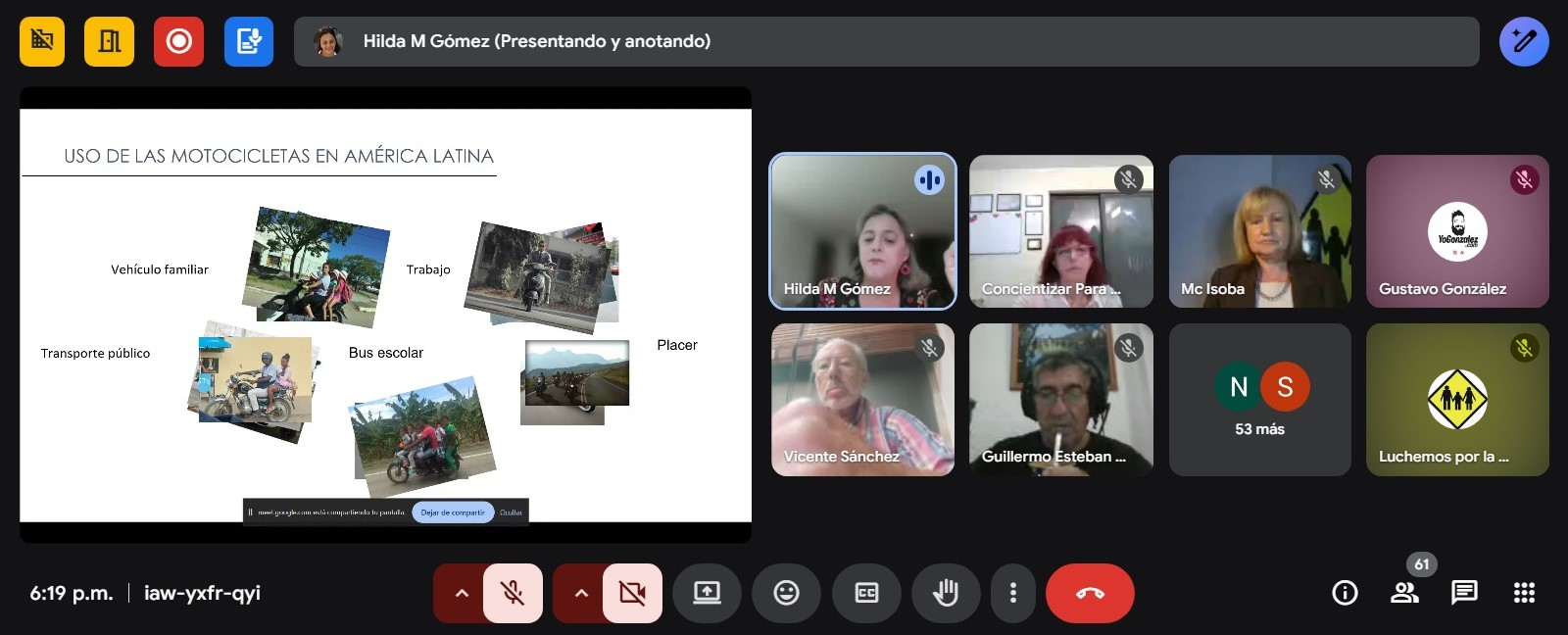
This long-awaited meeting, organized by Luchemos por la Vida with the support of twelve NGOs, took place on October 2nd to address the increase in motorcyclist deaths in the region, a global problem that, in Argentina, represents almost half of the fatal traffic victims.
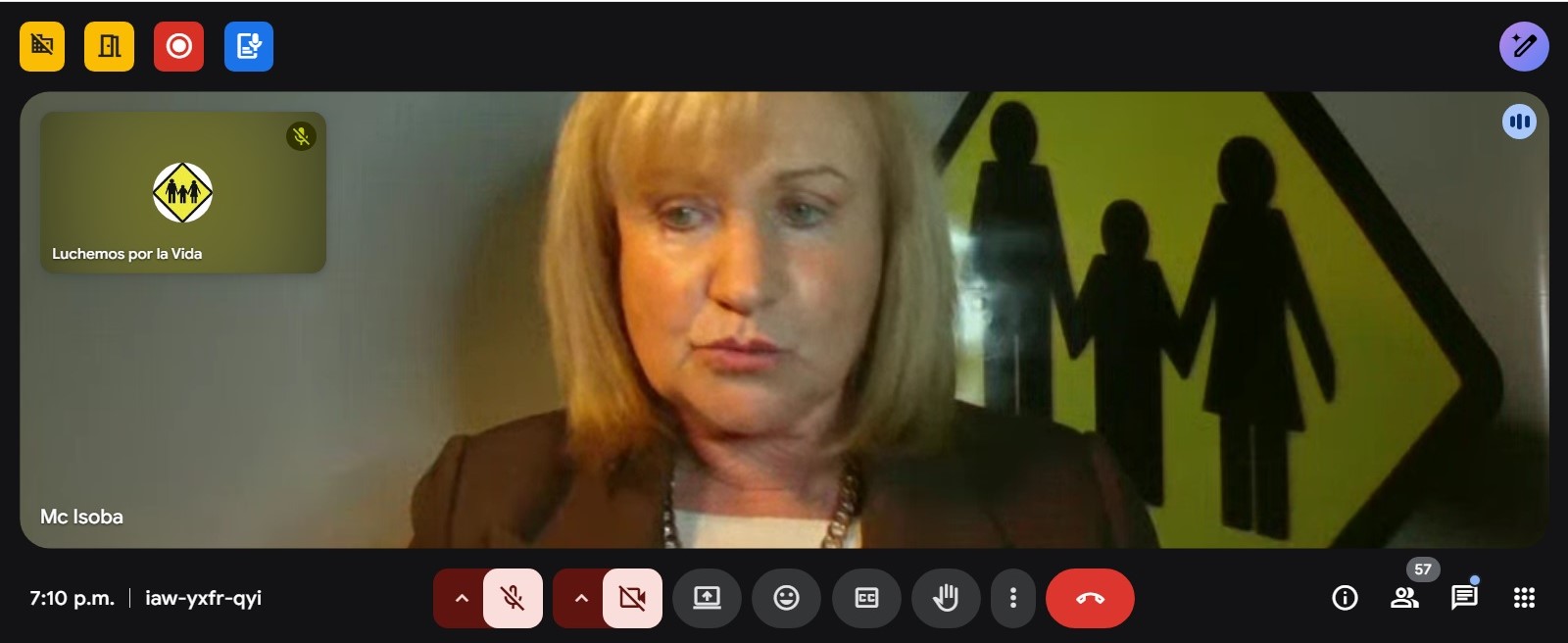
María Cristina Isoba, President of Luchemos por la Vida, opened the event.
Seven leading specialists shared information and experiences on reducing mortality and achieving a safer transportation system.
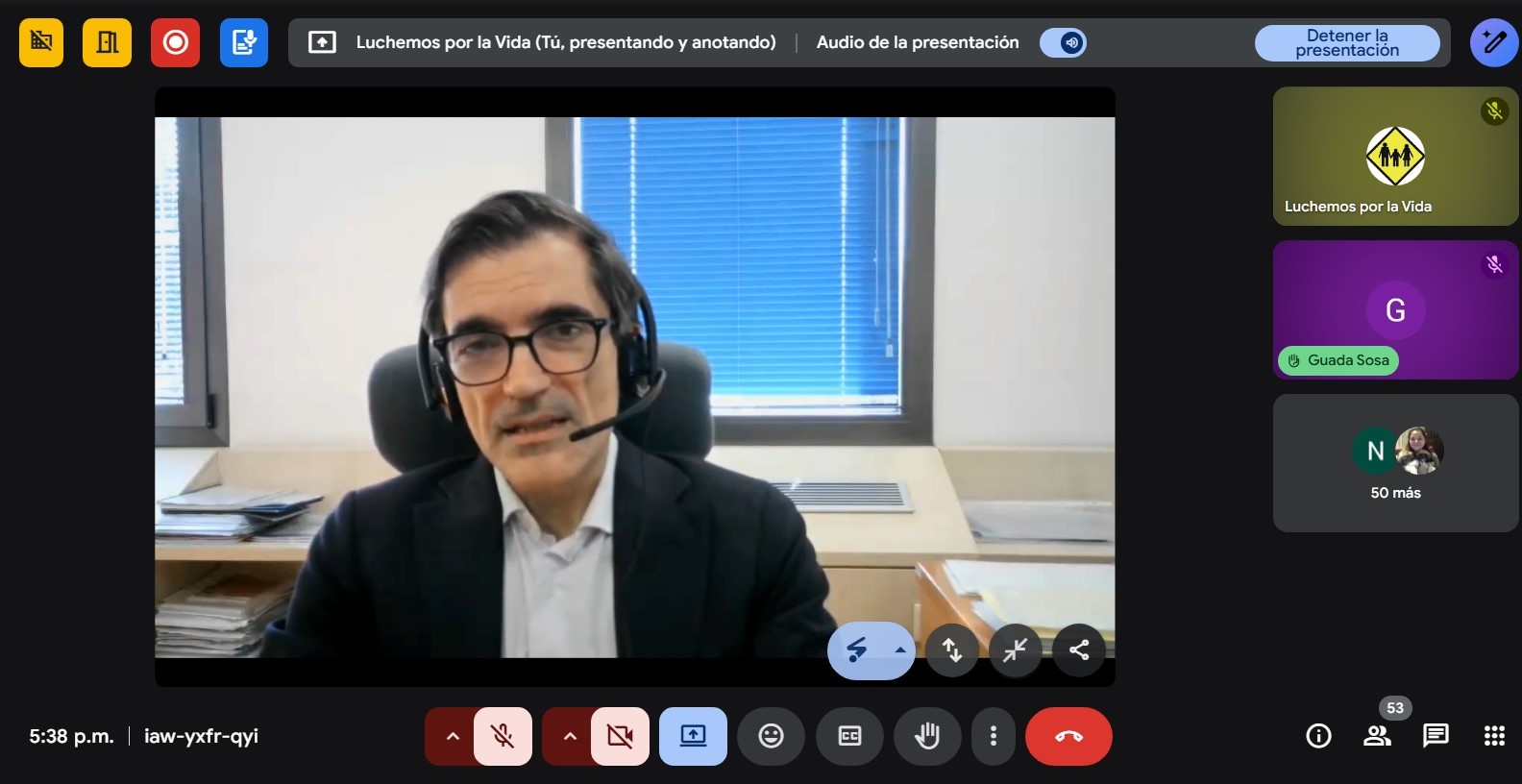
Álvaro Gómez, Director of the National Road Safety Observatory of the Spanish Dirección General de Tráfico (DGT), shared statistics and details of his country's strategic plan for motorcycle safety, emphasizing:
- Training in safe driving and risk factors such as speed and alcohol;
- Vehicle improvements, including highly effective ABS brakes and other technologies;
- Road infrastructure improvements, identification of high-accident sections, and modification of road layouts to create motorcycle-friendly routes;
- The use of helmets (widespread in Spain) and airbags.
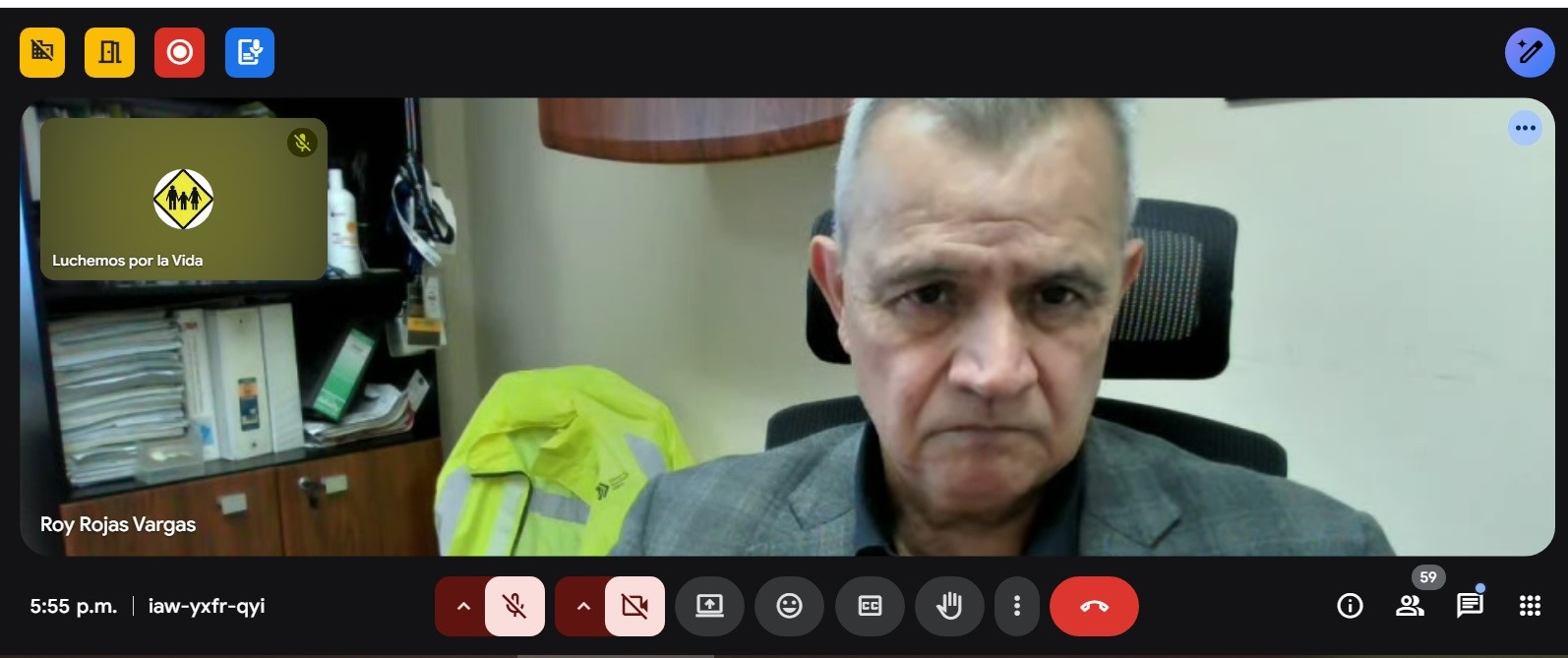
Roy Rojas Vargas, International Advisor on Safe Mobility and Road Safety, shared the situation of motorcyclists in Costa Rica, where the number of this type of vehicles has skyrocketed, as so has the number of fatalities, for various reasons (low cost, usefulness for work, lack of efficient public transportation and urban congestion).
He highlighted the following as good practices:
- An educational model that emphasizes risk awareness
- The development of technical standards for helmets;
- Enforcement and targeted campaigns;
- The importance of adapting actions to the specific context of each country.
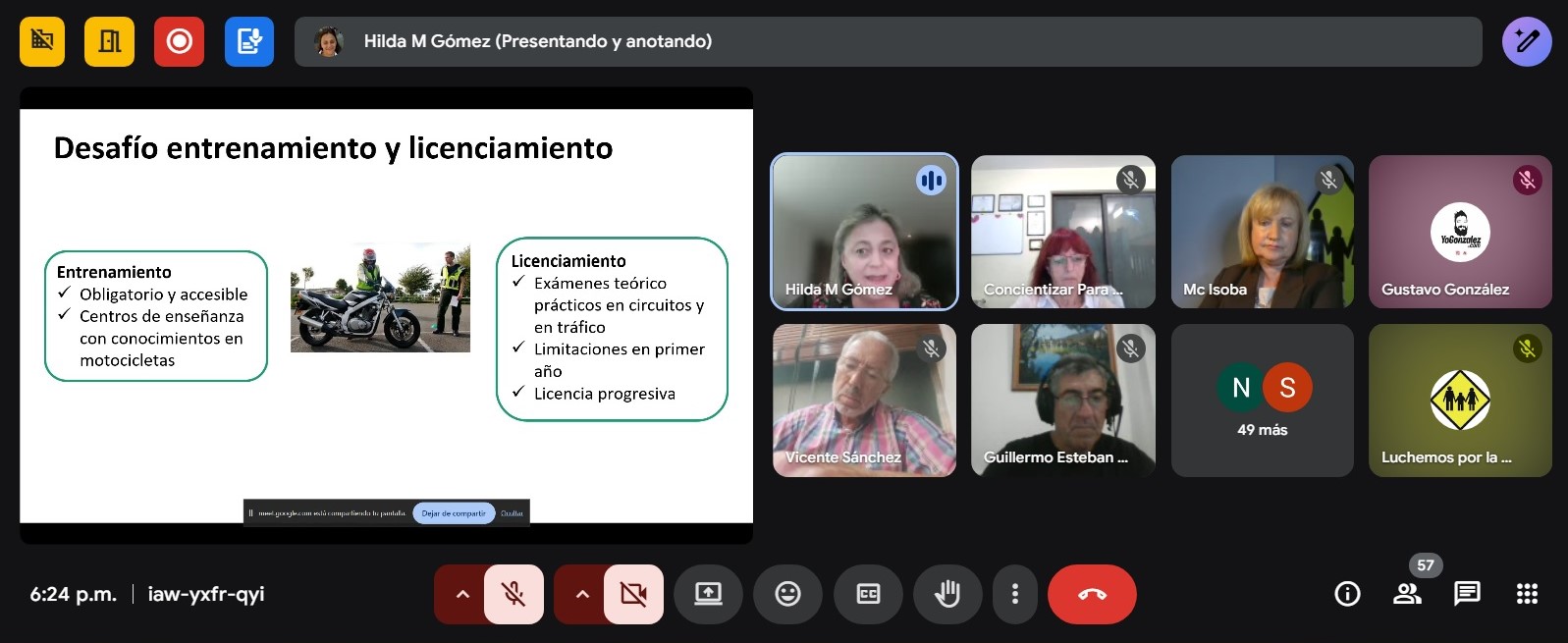
Hilda Gómez, from Colombia, consultant, professor, and President of the Advisory Board of Delft Road Safety Courses, presented data from the WHO.
She highlighted that, in Latin America, there are countries like the Dominican Republic where nearly 70% of traffic fatalities are motorcyclists. The main causes of these accidents are human factors related to the motorcyclist (inexperience, lack of training, speeding) and other road users who fail to see them. She emphasized the following effective measures:
- Good training and progressive driver's licenses;
- Reduced speed limits;
- Effective traffic controls and penalties;
- The installation of ABS brakes;
- Improved road design to reduce risks.

Laura Bosque, Executive Director of Fundación Trauma in Argentina, reported that traffic injuries are one of the main manifestations of physical trauma, especially among children and young adults.
She presented data from the Foundation, revealing that:
- 76% of motorcyclists admitted to hospitals were not wearing helmets, which increased the severity of injuries and mortality;
- Motorcyclists without helmets are three times more likely to suffer a severe traumatic brain injury and four times more likely to die.

Laura Moyano, motorcyclist and Deputy Director of the Road Safety Observatory in Quilmes, Buenos Aires Province, Argentina, identified the following as the main problems:
- The State's shortcomings in enforcing traffic regulations;
- The lax issuance of driver's licenses, which must change, evaluating not only knowledge of the regulations and driving skills, but also risk perception.
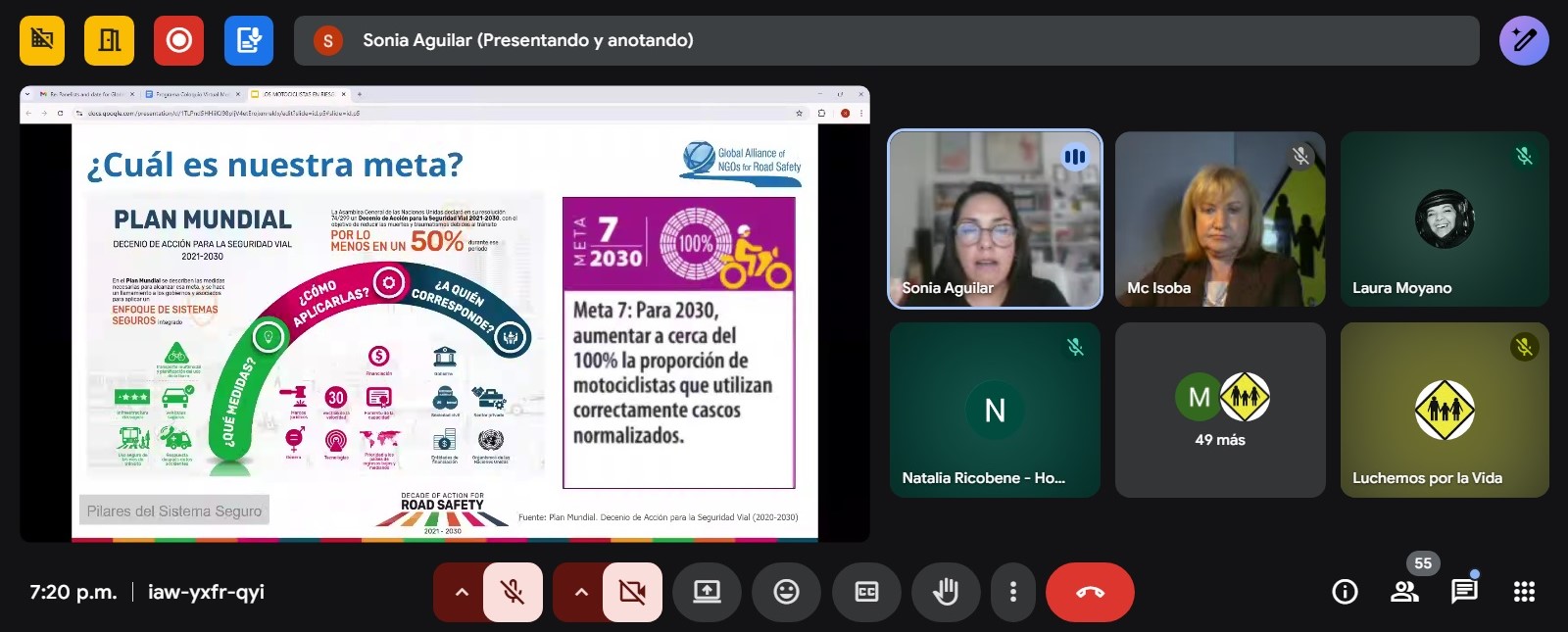
Sonia Aguilar, Regional Coordinator for Latin America of the Global Alliance of NGOs for Road Safety, shared alarming data:
- The disproportionate mortality rate among motorcyclists, who make up 14% of the vehicles on the road but account for 27% of deaths in the region;
- Despite one of the goals to reduce road fatalities this decade is that all motorcyclists use standardized helmets, many countries in the region lack legislation on the matter and/or do not guarantee safe, certified helmets.
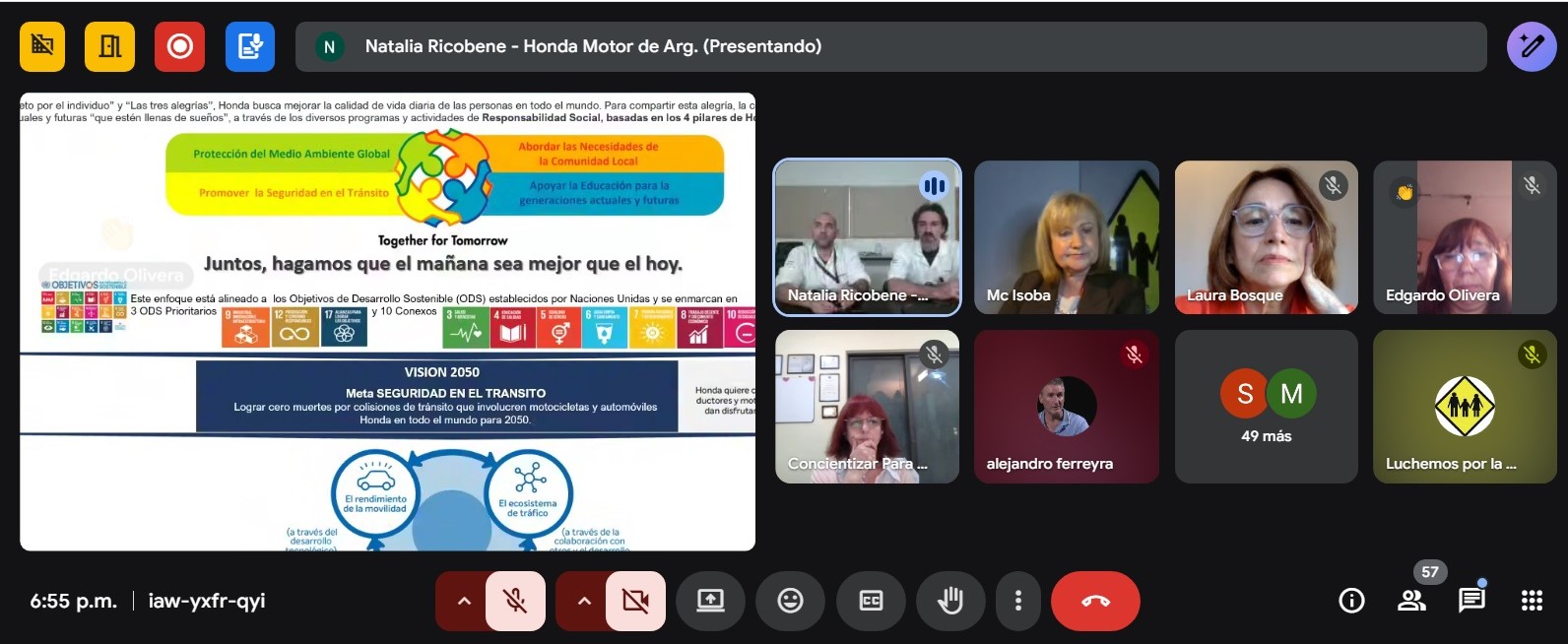
Honda Motor Argentina, represented by Gastón Britos, Deputy Manager of Corporate Relations, Natalia Ricobene (CSR), and Damián Paradisi (motorcycle technician), discussed their "Zero Deaths" vision as a corporate goal for 2050 for all its products. To achieve this, while contributing free educational workshops for young people and primary and secondary schools students, they are continuously developing technological improvements in their high-, mid-, and low-range motorcycles to reduce accidents:
- ABS brakes;
- Automatic hazard light systems;
- Traction control.
The event brought together many attendees committed to road safety and highly motivated by this issue. The speakers' presentations challenged us to promote successful, evidence-based actions to reduce motorcycle fatalities and increase safety for everyone.